State-Level Patterns in Welcome Package Structures Across US Betting Markets
Nils Becker · Aug 11, 2026
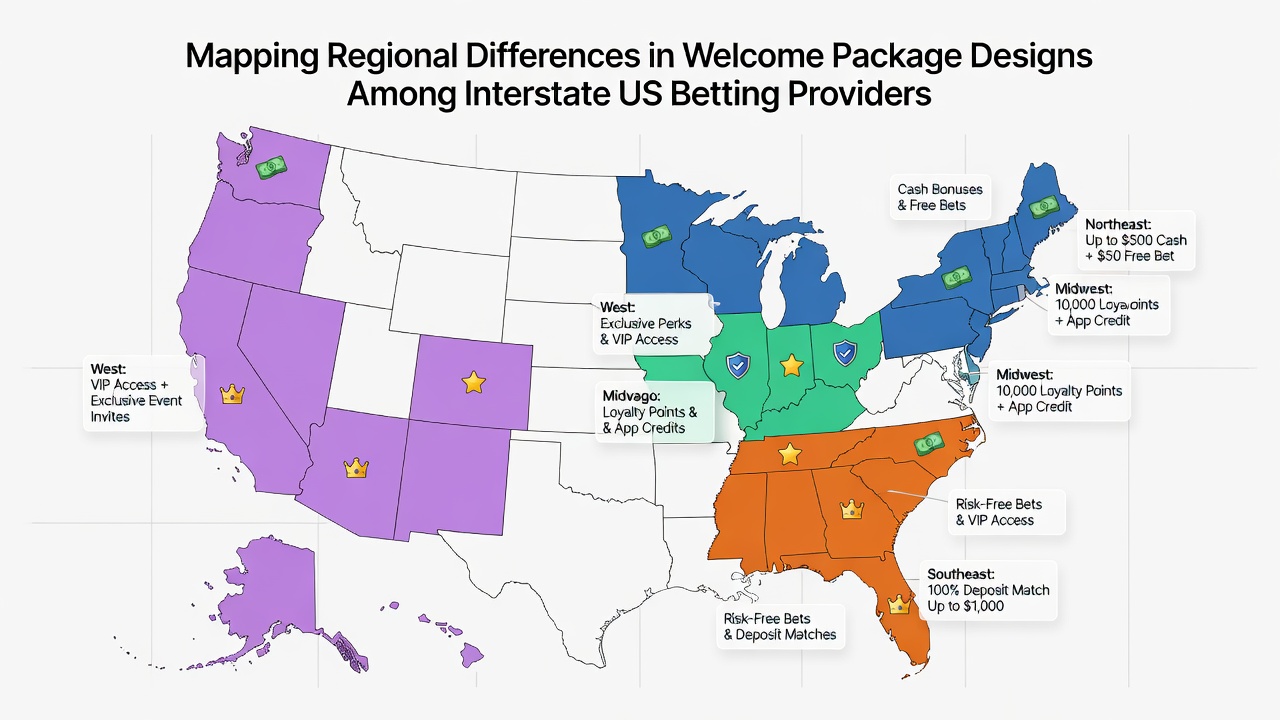
State-Level Patterns in Welcome Package Structures Across US Betting Markets
Operators licensed in multiple jurisdictions must adjust their welcome packages to align with each state's distinct regulatory framework, and data from 2025 through August 2026 shows these adjustments create measurable regional patterns in bonus structures, eligibility rules, and promotional layering. Interstate providers therefore develop separate welcome sequences for states such as New Jersey, Pennsylvania, Michigan, and Colorado while maintaining core brand elements that comply with local statutes on deposit matching, free bet issuance, and wagering requirements.
Regulatory Drivers Behind Package Design
State gaming commissions impose specific constraints that directly shape how operators construct initial offers, and these constraints produce observable differences when the same provider operates in adjacent markets. New Jersey's Division of Gaming Enforcement requires clear separation between deposit-match funds and free-play credits, whereas Pennsylvania's Gaming Control Board permits combined structures provided total value remains below established caps. Observers note that these rules lead providers to deploy higher match percentages in New Jersey while favoring extended free-bet ladders in Pennsylvania, and August 2026 licensing updates in both states reinforced those distinctions rather than harmonizing them.
Northeast Corridor Comparisons
Providers active in New York, New Jersey, and Pennsylvania display consistent differentiation in their welcome sequences, and the differences appear in both the size of initial deposits required and the number of days allowed for requirement completion. In New York, welcome packages often emphasize larger first-deposit matches paired with shorter playthrough windows, while New Jersey operators extend timelines and introduce tiered reload components within the first thirty days. Pennsylvania packages frequently incorporate insurance-style cashback on early losses, a feature less common in the other two states. Research from industry reports indicates these variations correlate with each commission's stance on player protection disclosures rather than with market competition alone.
Midwest and Mountain West Variations
Operators entering Illinois, Michigan, and Colorado adapt welcome designs to accommodate differing tax treatments and advertising guidelines, and these adaptations produce distinct package architectures. Illinois packages tend to front-load free bets with lower deposit thresholds, whereas Michigan structures often require larger initial deposits before releasing matched funds in stages. Colorado operators have incorporated location-based eligibility checks that tie bonus release to in-state verification, a step less emphasized in the Midwest states. Figures released by the American Gaming Association highlight how these regional adjustments affect average first-month player value across the three markets.
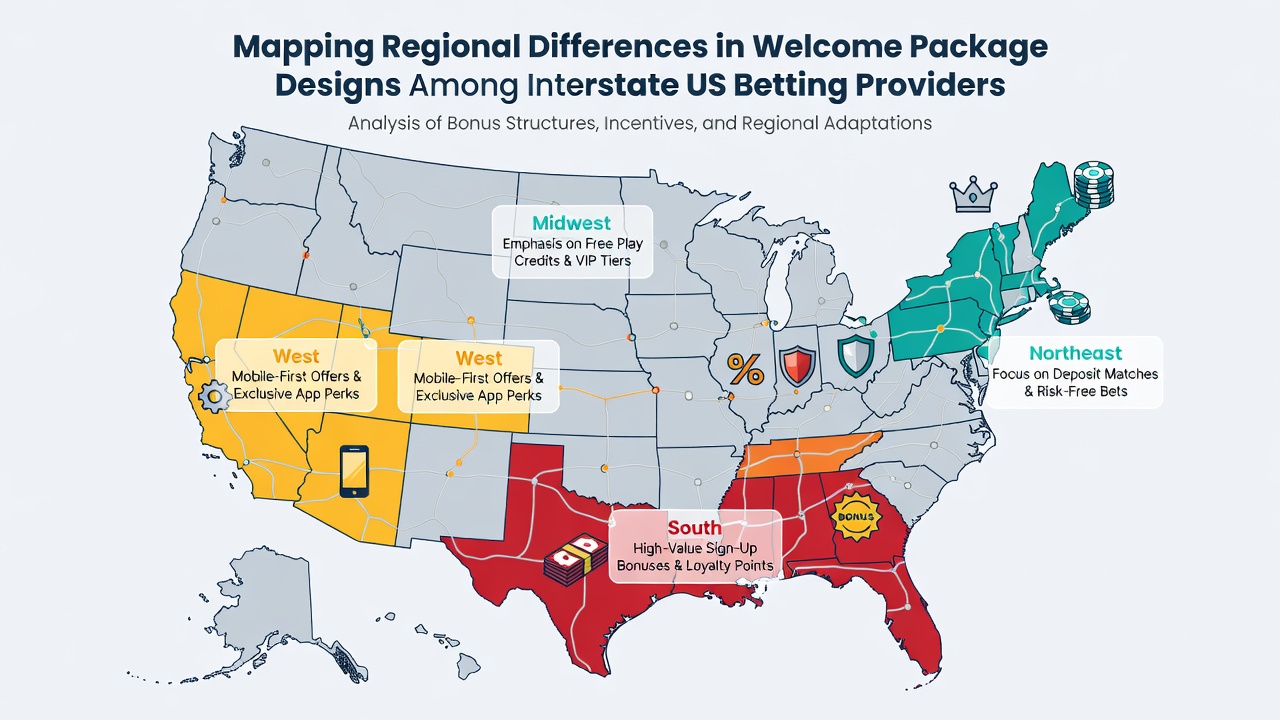
West Coast and Emerging Markets
California and Arizona present newer regulatory environments that continue to evolve, and providers testing multi-state welcome packages there have introduced hybrid models blending elements observed in established markets. Arizona packages frequently include sports-specific free bets tied to professional leagues popular within the state, while California operators experiment with casino-hybrid bonuses that combine table-game credits with sports wagering matches. Those who've tracked licensing applications note that both states require explicit labeling of bonus expiration dates, prompting clearer disclosure language than appears in some East Coast offerings. Data from the National Council on Problem Gambling shows these transparency requirements influence how quickly new users progress through welcome sequences in the western states compared with more mature markets.
Cross-Border Provider Strategies
National brands operating across six or more states maintain centralized creative teams that produce modular welcome assets, and these teams swap individual components such as match percentages, free-bet quantities, and playthrough multipliers according to each jurisdiction's latest guidance. August 2026 saw several providers update their modular systems following rule changes in Michigan and Pennsylvania, resulting in simultaneous adjustments to welcome packages in those states without altering offers in unaffected markets. Industry analysts at the University of Nevada, Las Vegas Gaming Research Center documented how such modular approaches reduce compliance costs while preserving the appearance of locally tailored promotions.
Conclusion
Regional differences in welcome package designs among interstate US betting providers stem primarily from state-specific regulatory requirements rather than from uniform national standards, and these differences manifest in deposit thresholds, bonus layering, playthrough timelines, and disclosure language. Providers that operate across multiple jurisdictions therefore maintain parallel welcome sequences calibrated to each commission's rules, and data collected through mid-2026 confirms that such calibration produces measurable variation in both package structure and player progression patterns. Continued expansion into additional states will likely sustain this patchwork approach unless broader federal or multi-state compacts emerge.