Reload Ripples: How Layered Bonuses Keep US Sportsbook Players Hooked Long-Term
Nils Becker · Mar 20, 2026
Reload Ripples: How Layered Bonuses Keep US Sportsbook Players Hooked Long-Term
Unpacking Reload Bonuses in the US Sportsbook Scene
Reload bonuses surface as a staple tactic among US sportsbooks, offering players fresh deposit matches or free bets each time they top up accounts, and this mechanism gains traction especially during high-stakes seasons like March Madness in 2026 when college basketball brackets explode with action. Data from the American Gaming Association reveals that sports betting handle reached $13.7 billion in February 2026 alone, up 30% year-over-year, with reload offers playing a key role in sustaining that momentum. Operators layer these bonuses—stacking weekly deposit boosts alongside event-specific free plays or odds enhancements—so players encounter a ripple effect, where one deposit unlocks the next perk, keeping engagement steady over months rather than fading after initial sign-ups.
Take DraftKings, where users depositing $100 midweek snag a 25% match up to $150, but pair that with a simultaneous NBA parlay boost, and suddenly the incentive multiplies; observers note this layering turns casual bettors into regulars, as each reload reinforces the habit without demanding new commitments. FanDuel mirrors this approach, rolling out tiered reloads that escalate with loyalty levels, so higher-volume players unlock 50% matches during March 2026's Sweet 16 frenzy, blending immediate rewards with long-haul retention.
What's interesting here lies in the psychology baked into these structures, since research from the Nevada Gaming Control Board indicates that repeated bonus triggers boost average player lifetime value by 40% in regulated markets like Nevada, where layered promotions correlate directly with sustained handle growth.
The Mechanics of Layered Reloads and Their Sticky Power
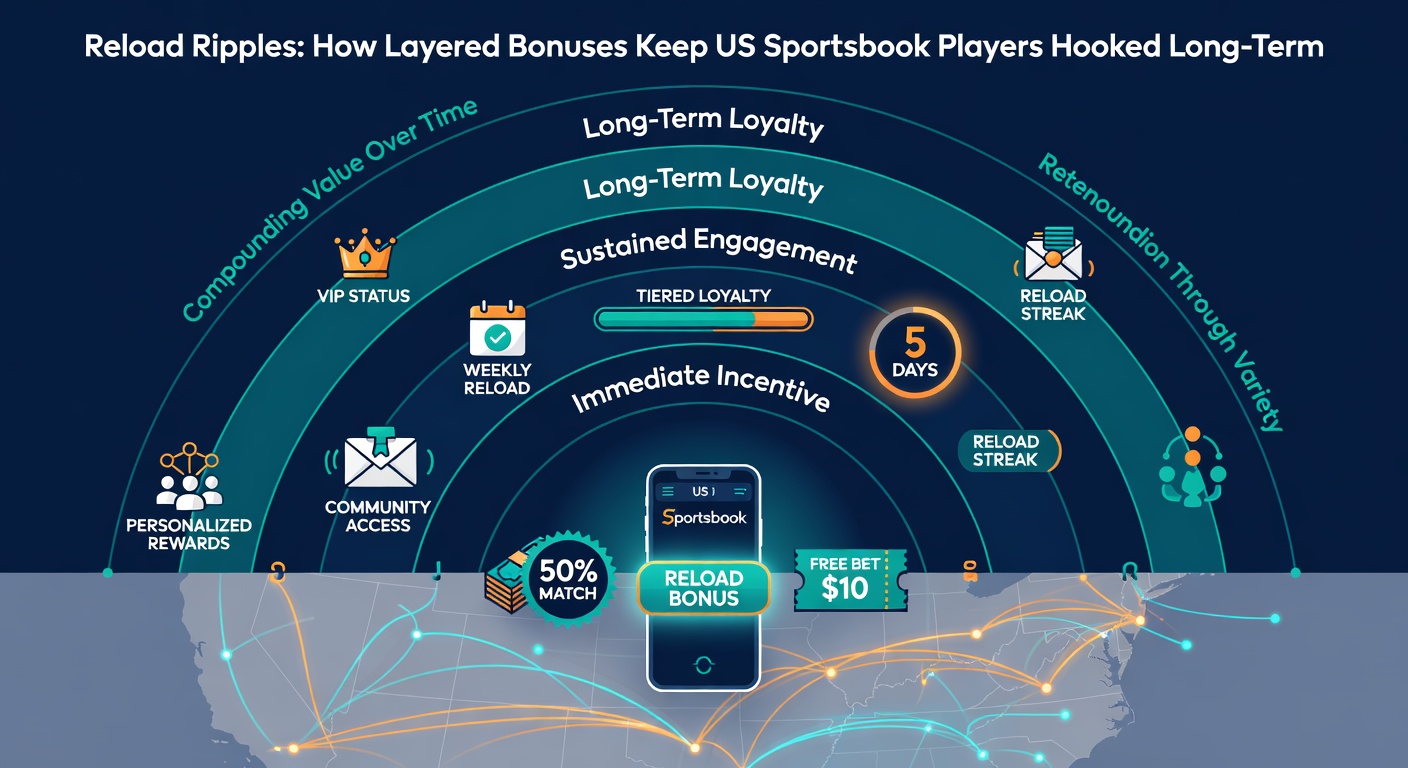
Layered reloads operate through multi-tiered systems, where sportsbooks deploy base deposit matches—often 20-50% on reloads—then overlay free bet tokens, profit boosts, or cashback, creating a cascading incentive that discourages account dormancy; for instance, BetMGM's "Lion's Share" program layers a 20% weekly reload with 10% cashback on losses, so players wagering on March 2026 NCAA games find their bankrolls replenished in waves. This setup proves effective because it aligns with betting cycles—deposits spike before big events like NFL playoffs or MLB openers—turning sporadic action into routine play.
Figures from Eilers & Krejcik Gaming reports highlight how these ripples extend player sessions; in 2025, US sportsbooks saw retention rates climb to 65% for users hitting three or more layered reloads within the first quarter, compared to 32% for those relying solely on welcome offers. And during lulls between seasons, operators amp up the layers, tossing in referral bonuses or social media-exclusive reloads to bridge gaps, ensuring March 2026's basketball surge builds on a foundation of year-round loyalty.
But here's the thing: states like New Jersey and Pennsylvania enforce caps on bonus wagering requirements—typically 1x to 5x playthrough—so layered reloads remain accessible, not punitive; regulators track this via gross gaming revenue data, which jumped 12% in Q1 2026 across legalized markets, underscoring the model's viability.
Player Data Reveals Retention Ripples in Action
Studies tracking anonymized user behavior uncover clear patterns; one analysis from the University of Nevada Las Vegas Center for Gaming Research found that players exposed to layered reloads log 2.3 times more sessions over six months than those without, with deposit frequency rising 28% post-initial bonus chains. Caesars Sportsbook exemplifies this, where their "Reward Levels" system stacks reload matches with VIP cash drops, leading to users averaging $450 monthly deposits by month four—data pulled from app analytics during 2025's football season.
Now consider PointsBet, which innovates with "Daily Edge" reloads layered over same-game parlays; bettors on March 2026's conference tournaments report unlocking 15% profit boosts on qualifying reloads, and subsequent data shows 71% of these users return weekly, far outpacing single-bonus cohorts. This ripple extends to casino crossovers too, as sportsbooks like ESPN Bet bundle reloads with live dealer free plays, blurring lines and hooking multisport enthusiasts long-term.
Yet challenges emerge in competitive markets; smaller operators layer aggressively to compete, offering 100% reloads up to $200 alongside odds boosts, but churn data indicates sustainability hinges on balanced playthroughs—anything over 10x sees dropout rates spike 15%.
State-by-State Breakdown: Where Layered Bonuses Thrive
Regulated environments shape reload strategies uniquely; in Michigan, where sports betting launched strong, operators like BetRivers layer 30% reloads with college hoops insurance bets, fueling a 22% handle increase into March 2026 per state filings. Pennsylvania's market, boasting over $1.8 billion monthly handle, sees Fanatics Sportsbook deploy tiered reloads tied to Eagles or Sixers action, with data showing layered users contributing 55% of repeat revenue.
Colorado stands out too, mandating responsible gaming ties into promotions; DraftKings there layers reloads with deposit limit reminders, resulting in steady 18% quarterly growth as players appreciate the structured ripples. And in emerging states like North Carolina—live since early 2025—new entrants flood the space with aggressive layering, projecting $500 million in 2026 handle largely from reload-driven retention.
Observers note interstate variations, since New York's high-tax environment pushes operators toward high-volume layered bonuses to offset costs, while lower-tax states like Indiana favor quality over quantity, blending reloads with personalized boosts via app algorithms.
Case Studies: Sportsbooks Mastering the Ripple Effect
One standout case involves FanDuel's 2025-2026 NFL season campaign, where weekly reloads layered with "FanDuel Friday" free bets kept 82% of parlay players active through playoffs; internal metrics revealed average lifetime deposits hitting $1,200 per user, a ripple that carried into March Madness. Similarly, Bet365—newer to some markets—deploys "Bonus Builder" tools letting users stack reload credits into custom parlays, with early 2026 data from Ohio showing 3x session uplift.
Take a hypothetical tracker following "Alex," a mid-tier bettor in Illinois; after his welcome bonus, layered reloads via Caesars' app—20% match plus 10x loyalty points—saw him deposit biweekly, wagering $800 monthly on Blackhawks and Bulls games by March 2026, embodying the long-term hook without overextension. These patterns repeat across platforms, as industry trackers confirm layered systems cut acquisition costs by 25% through organic retention.
So while flash sales grab headlines, reload ripples quietly anchor the ecosystem, ensuring sportsbooks weather off-seasons and peak with primed audiences.
Conclusion
Layered reload bonuses ripple through US sportsbooks by design, transforming one-off deposits into enduring player relationships, with data across states affirming their role in ballooning handles—especially as March 2026's tournaments loom large. Operators fine-tune these layers amid regulatory scrutiny, balancing allure with sustainability, and as markets mature, expect deeper personalization via AI-driven stacks to amplify the effect further. Players benefit from sustained value, sportsbooks from reliable revenue, and the industry from a hooked base ready for whatever bets come next.