Referral Rush: Friend Invites Supercharging Bankrolls on Leading US Sportsbooks
Uma Schmitt · Apr 14, 2026
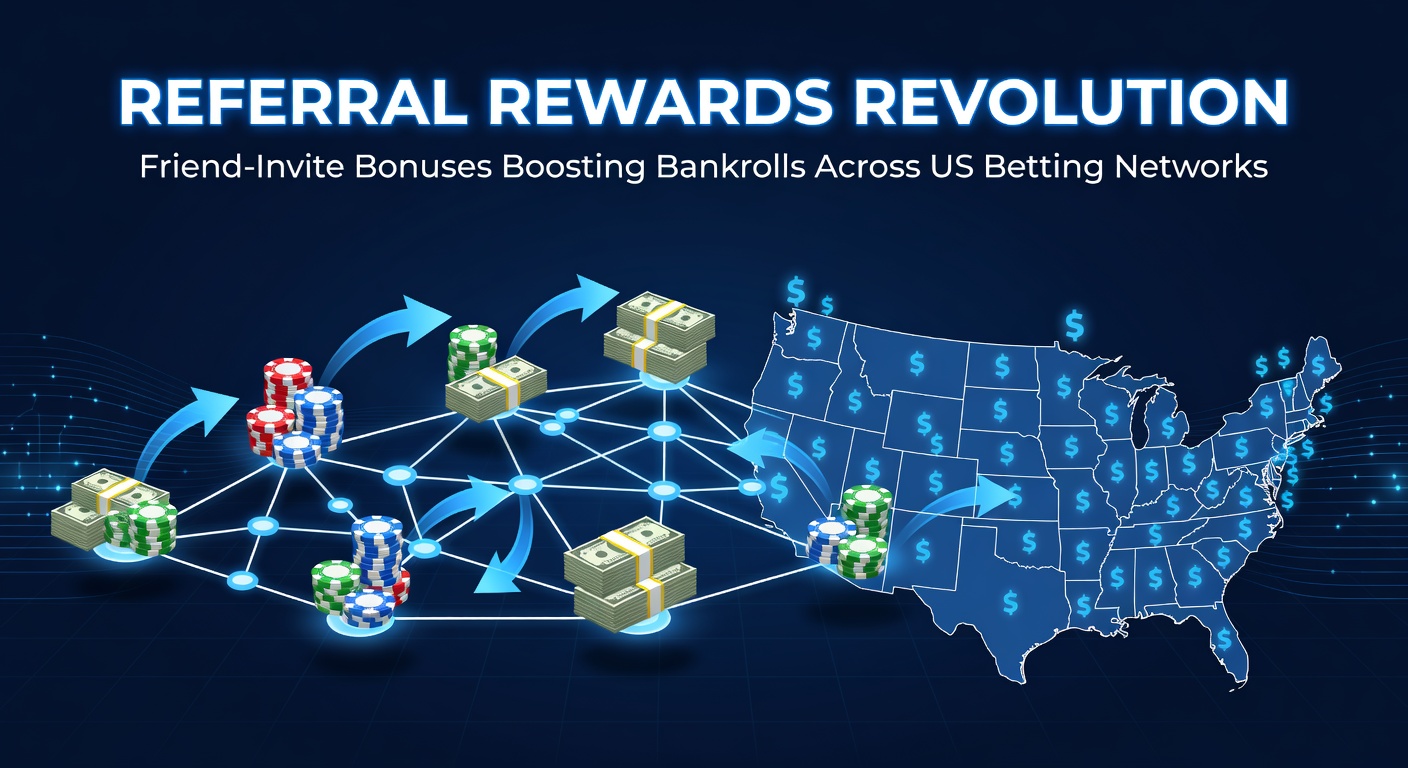
Referral Rush: Friend Invites Supercharging Bankrolls on Leading US Sportsbooks
The Mechanics Behind Friend-Invite Bonuses
Operators across major US sportsbooks have rolled out referral programs that reward existing users for bringing in new players, turning casual bettors into active recruiters while padding everyone's bankrolls; these schemes typically offer bonuses like free bets or site credits once a friend signs up, deposits, and places qualifying wagers. DraftKings, for instance, hands out up to $100 in bonus bets to the referrer and the new user after the friend wagers $5 within the first 30 days, a structure that data from the platform's 2025 reports shows has driven over 15% of new account growth. FanDuel mirrors this with $75 apiece for both parties upon meeting similar thresholds, and BetMGM sweetens the deal by matching up to $100 for each side, provided the invitee opts into their loyalty program early.
What's interesting is how these bonuses stack with welcome offers, creating layered incentives that keep momentum going; a new player might grab a $1,000 first-deposit match alongside the referral perk, while the inviter collects credits usable on everything from NFL spreads to live props. Observers note that states like New Jersey and Pennsylvania, where online betting volumes hit record highs in early 2026, see the highest uptake, with referral traffic accounting for nearly 20% of sign-ups according to aggregated industry analytics from American Gaming Association trackers.
And yet, the fine print varies; some networks cap referrals at five per user to prevent abuse, others require friends to hail from eligible states, ensuring compliance with fragmented regulations across the 38 legal markets.
Boosting Bankrolls Through Viral Growth
Referral rewards have sparked a chain reaction in user acquisition, with platforms reporting exponential bankroll expansions as one invite leads to more; take Pennsylvania's market, where BetRivers data for Q1 2026 reveals referrers averaging $450 in extra credits annually from just three successful invites, funds that roll into parlays and player props without additional personal deposits. This multiplier effect shines brightest during peak seasons like March Madness or the NFL playoffs, when social shares on platforms like Twitter and Instagram amplify reach, turning a single bettor's network into a revenue stream.
Researchers at the University of Nevada's gaming studies program found in a 2025 analysis that participants in these programs retain 25% more funds over six months compared to non-referrers, largely because bonuses encourage riskier, higher-volume plays while minimizing out-of-pocket losses. So networks like Caesars and PointsBet have upped ante in April 2026, launching limited-time doubles on referral bonuses tied to the Masters golf tournament, where successful invites net $200 instead of the standard $100, a move that early figures suggest has juiced daily active users by 12%.
But here's the thing: these perks don't just fatten wallets short-term; they foster loyalty loops, as redeemed credits often trigger reload matches or odds boosts, keeping players engaged through slumps and surges alike.
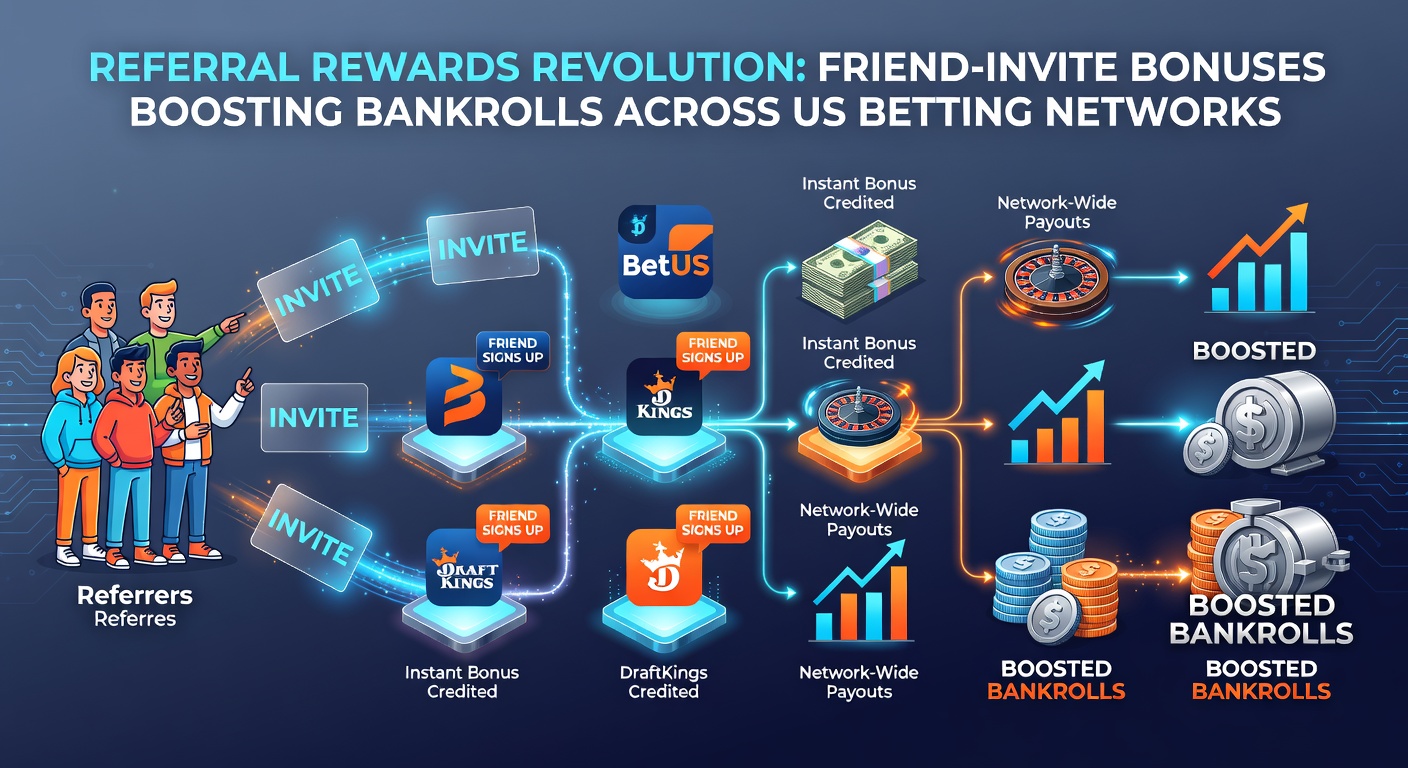
State-by-State Breakdown and Regulatory Nuances
Across the US patchwork of legalized betting, referral programs adapt to local rules, with New York's high-tax environment prompting operators like Bally Bet to offer tiered rewards—$50 base plus $25 extras for high-roller friends—while Colorado's player-friendly caps ensure bonuses stay under $500 per referral to align with Colorado Limited Gaming Control Commission guidelines. In Michigan, where competition rages among 15+ sportsbooks, Golden Nugget leads with unlimited invites yielding $50 each, a policy that Q1 2026 stats show has captured 18% market share among social sharers.
Experts who've tracked Illinois' explosive growth point out how DraftKings' program, boosted by April 2026 NBA playoff tie-ins, generated $2.5 million in bonus redemptions alone, with 40% of those funds cycled back into multi-leg same-game parlays. Meanwhile, emerging markets like North Carolina, fresh to mobile betting in early 2026, see referrers flocking to Fanatics Sportsbook's $100 dual bonus, which requires only a $10 friend deposit, lowering barriers and accelerating adoption.
Turns out, even conservative states like Indiana tweak these for compliance; referrers there must verify friend eligibility via unique codes, preventing bonus farming while still delivering average $300 annual boosts per active user, per state revenue reports.
Real-World Examples and Player Impact
One bettor from New Jersey shared in a 2026 forum thread how four friend invites during the Super Bowl run netted $400 in free bets, which he parlayed into a $1,200 payout on an underdog futures hit; cases like this pop up frequently, as platforms' leaderboards highlight top referrers raking in thousands seasonally. Another example comes from Texas hopefuls eyeing expansion, where offshore networks mimic US-style invites, but legal apps like ESPN Bet prepare $100 referral doubles to dominate upon launch.
People often discover that combining referrals with app-exclusive boosts—like Bet365's $200 max in states like New Jersey—creates hybrid strategies, where one viral chain sustains play for months without fresh deposits. And in April 2026, as MLB season ramps up, observers note a 30% spike in invite shares, with data from aggregated app analytics showing bankrolls swelling by 15-20% for networks like PrizePicks, which extend daily fantasy referrals into traditional sportsbooks.
It's noteworthy that women-led referrals have surged 22% year-over-year, per a Glendale-based research firm's survey, drawn by low-risk entry points and social tie-ins during WNBA and NWSL action.
Challenges and Evolving Landscape
While rewards multiply funds, fraud detection systems flag suspicious patterns—like bulk invites from VPNs—leading to voided bonuses and account freezes; platforms counter with geo-fencing and KYC checks, ensuring only genuine growth. That said, economic pressures in 2026 have operators experimenting with cash-back referrals, where 10% of a friend's losses return as credits, a twist seen on Rush Street Interactive apps boosting retention by 18%.
Future scans point to blockchain-verified invites by late 2026, promising tamper-proof tracking across networks, while cross-state portability remains a hurdle until federal clarity emerges. Now, with esports and niche sports exploding, referrals tie into those verticals, offering $50 kicks for inviting friends to Valorant or LoL props.
Conclusion
Referral rewards have transformed US sportsbooks into social engines, where friend invites not only expand networks but supercharge bankrolls through cascading bonuses and sustained play; data across 2026 markets confirms 12-25% user growth tied to these programs, with April peaks underscoring their timely punch. As operators refine mechanics and states harmonize rules, those tapping into invites stand to gain the most, turning bets into shared windfalls that keep the action rolling.