Push Notifications Drive Shifts in Bonus Claim Timing Among US Sportsbook Users
Nils Becker · Aug 23, 2026
Push Notifications Drive Shifts in Bonus Claim Timing Among US Sportsbook Users
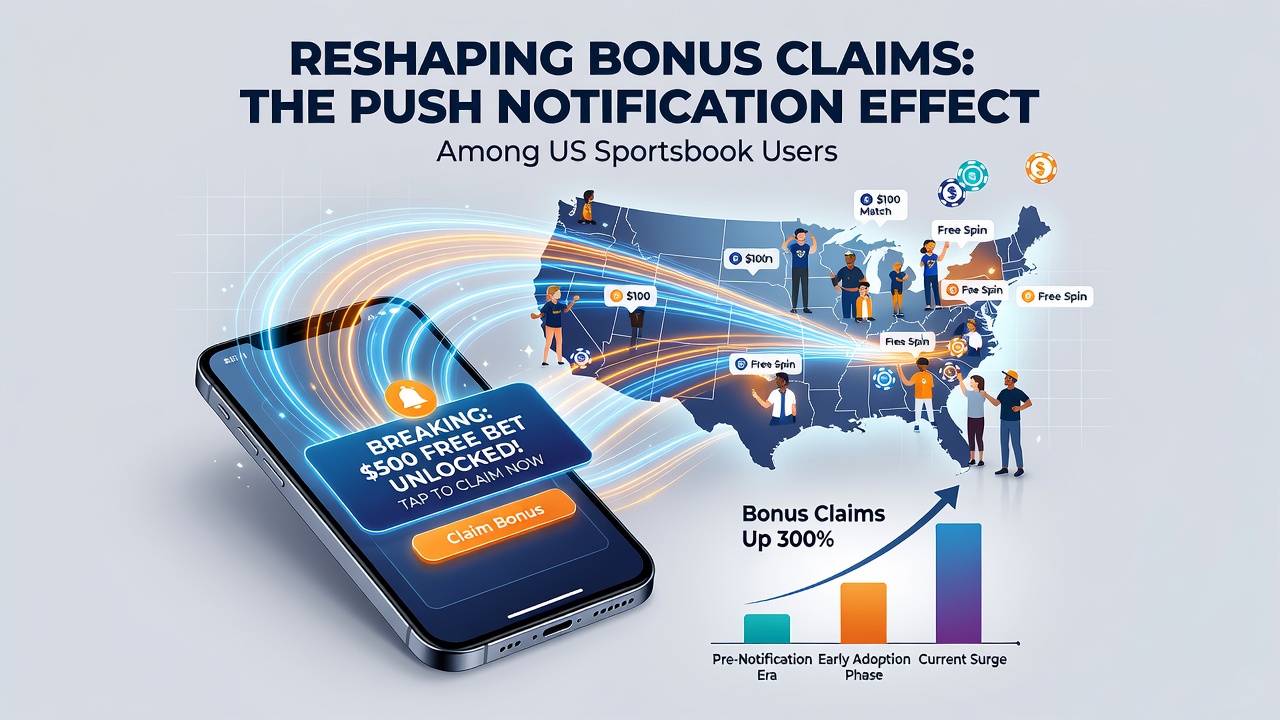
Push notifications have become a central tool for US sportsbooks seeking to connect directly with users about time-limited bonus offers, and recent platform data shows measurable changes in how those offers get claimed. Operators in states such as New Jersey, Pennsylvania, and Michigan report that alerts sent through mobile apps now account for the majority of bonus redemptions within the first hour of availability, whereas email and website banners previously spread claims across several days.
Industry tracking from the American Gaming Association indicates that app-based sportsbooks increased push notification volume by roughly 40 percent between 2024 and 2026, with bonus-related messages forming the largest share. Those alerts typically include deposit-match promotions, free-bet triggers, and odds-boost windows tied to specific games or events, and users who receive them often complete the required deposit or wager steps before the notification expires.
Timing Patterns and Claim Speed
Studies of user logs from major operators reveal that bonus claims now cluster in narrow windows immediately after a push arrives, often within 15 to 45 minutes. This compression replaces earlier patterns where players waited until evening or the next day to review offers through email summaries or in-app banners. The shift appears tied to the real-time nature of the alerts, which include countdown timers and one-tap claim buttons that reduce friction between notification and action.
During the opening weeks of the 2026 NFL preseason, several platforms recorded peak claim rates between 8 p.m. and 10 p.m. local time, coinciding with evening push campaigns that highlighted same-game parlay bonuses. Observers note similar spikes around college football kickoffs and MLB night games, suggesting that live-event timing amplifies the effect of the notifications.
Frequency and User Segmentation
Data collected across multiple state-regulated markets shows that frequent bettors receive more targeted bonus alerts than casual users, and those frequent users convert the offers at higher rates. Segmentation algorithms analyze deposit history, wager volume, and preferred sports to determine which accounts receive which messages, resulting in distinct claim patterns by demographic group. Younger users, for example, show quicker responses to free-bet notifications, while older cohorts respond more to cashback-style reloads.
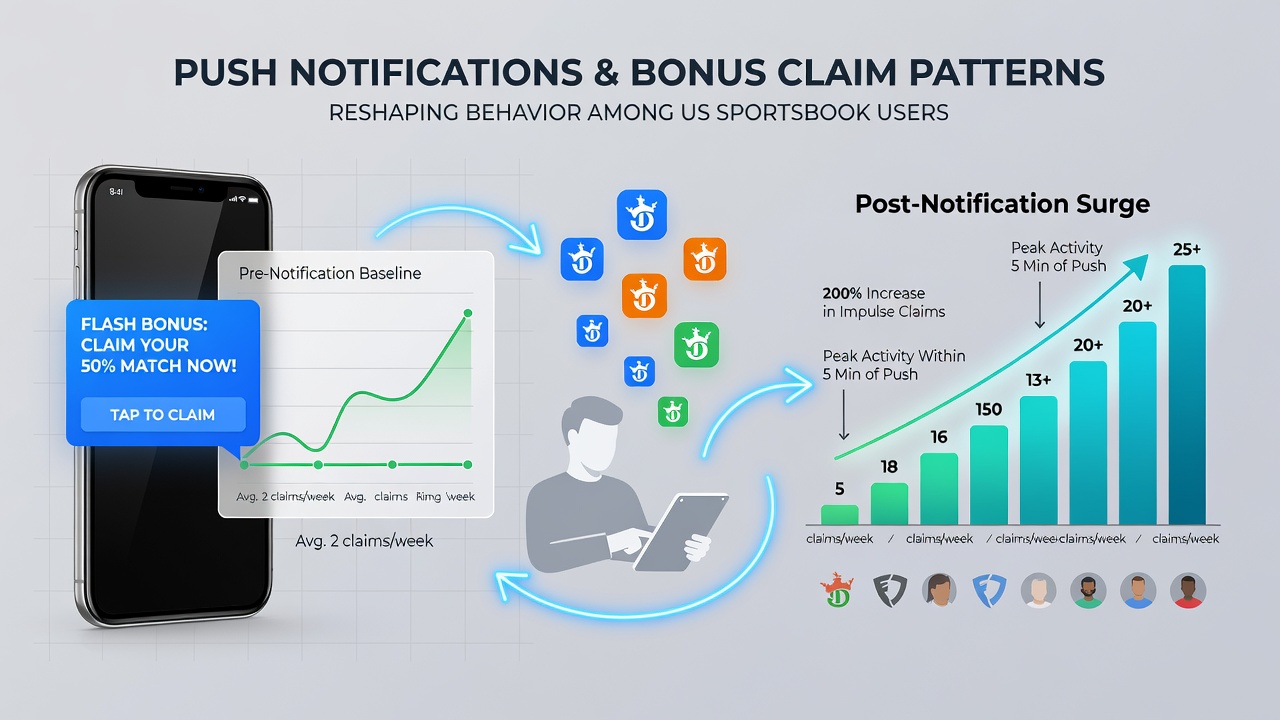
By August 2026, several operators had introduced tiered notification schedules that limit daily alerts for lower-activity accounts while increasing frequency for high-value segments. Early results from these experiments indicate that moderated volume can sustain claim rates without triggering opt-outs, although comprehensive multi-state figures remain limited.
Platform Adjustments and Compliance
Sportsbooks have adjusted bonus structures to match the speed of push-driven claims. Shorter validity windows, often 24 to 48 hours, appear more frequently because operators can now reach users instantly rather than relying on slower channels. At the same time, responsible-gaming features such as cool-down periods and spend limits remain active within the same apps that deliver the alerts, creating a dual system where promotional messages and protective tools coexist.
State gaming regulators in New Jersey and Pennsylvania require operators to maintain records of all promotional communications, including push notifications, and to ensure that claims do not bypass age or location verification. These rules have prompted platforms to embed compliance checks directly into the notification flow so that users must confirm eligibility before a bonus activates.
Cross-Platform Comparisons
Comparisons between mobile and desktop users illustrate the reach advantage of push technology. Desktop sessions still rely on email or site banners, and claim times for those users remain longer on average. Mobile users who enable notifications show claim rates up to three times higher than those who disable them, according to internal metrics shared in industry roundtables. This gap has encouraged operators to promote notification permissions during onboarding and after app updates.
Research published by the University of Nevada, Las Vegas gaming research center has examined how notification timing interacts with sports schedules, finding that alerts sent two to four hours before major events generate the strongest immediate response. The same study noted that post-event recap bonuses, delivered the morning after, produce steadier but slower claim curves spread over several hours.
Conclusion
Push notifications continue to compress the interval between bonus availability and user action across US sportsbooks, producing distinct daily and weekly claim rhythms that align with both event schedules and notification delivery times. State-level data and operator reports document higher conversion within narrow windows, segmentation-driven targeting, and adjustments to bonus duration that reflect the speed of mobile alerts. As platforms refine delivery frequency and compliance integration through 2026, the observable patterns in bonus claims remain closely linked to the timing and content of these direct mobile communications.