Digital Pathways in US Gaming: Poker Incentives and Mobile Reload Strategies Forge Lasting Engagement Routes
Devon Patterson · Jun 9, 2026
Digital Pathways in US Gaming: Poker Incentives and Mobile Reload Strategies Forge Lasting Engagement Routes
US online gaming platforms have developed intricate systems that connect poker incentives with mobile reload bonuses, and these structures guide players through successive stages of participation. Observers note that operators design reward sequences beginning with initial sign-up offers, then advancing through targeted poker promotions and recurring mobile deposits that sustain activity over extended periods. Data from regulated markets shows these layered approaches increase session frequency while encouraging shifts between poker rooms and other verticals such as sportsbooks or casino games.
Poker Incentives as Entry Points and Retention Tools
Poker rooms on major US platforms utilize rakeback percentages, tournament ticket bundles, and loyalty tier multipliers to draw participants into regular play. Research indicates that players who receive consistent rake credits tend to maintain higher hand volumes compared with those on standard structures. Platforms integrate these rewards into weekly leaderboards where accumulated points unlock cash prizes or exclusive tournament seats, thereby creating measurable progression markers. Figures reveal that such systems operate alongside cash-game promotions where volume-based bonuses scale with hours played, which encourages longer sessions without abrupt resets at the end of promotional periods.
Those tracking engagement patterns have documented how poker incentives frequently serve as bridges to other products. A player completing a weekly rake challenge might receive a reload code valid only inside the mobile app, directing activity toward deposit-funded sessions in sports or slots sections. This cross-vertical movement forms part of broader player pathways that operators refine through behavioral data collected in real time.
Mobile Reload Mechanics and Sequential Engagement
Mobile reload bonuses typically appear as percentage matches on deposits made through dedicated applications, often tied to specific days or time windows. Operators schedule these offers to coincide with peak usage hours, and data shows higher redemption rates when reloads stack with ongoing poker promotions. Players who activate a Monday reload, for instance, may then encounter a mid-week poker freeroll invitation that requires an additional deposit completed inside the same app environment.
Studies from state-regulated markets demonstrate that reload frequency influences retention curves. Platforms offering three or more structured reload opportunities per week report steadier deposit patterns among mid-tier users compared with those limited to single monthly events. teh mechanics usually include wagering requirements calibrated to poker rake contributions, allowing players to clear obligations while remaining inside familiar game formats rather than migrating to unrelated titles.
June 2026 Platform Adjustments and Emerging Patterns
During June 2026 several operators introduced updated reward dashboards that display combined poker and mobile progress in unified interfaces. These dashboards track cumulative rake alongside reload deposits, awarding milestone credits when thresholds are met across both categories. Regulatory filings indicate that such integrations align with existing responsible gaming tools, presenting spending summaries alongside reward balances to maintain transparency.
One documented development involves tiered reload ladders that unlock higher match percentages after consecutive weeks of poker activity. Players advancing through bronze, silver, and gold levels receive escalating mobile bonus values, and preliminary metrics suggest these ladders extend average account lifespan by encouraging consistent weekly engagement rather than sporadic large deposits.
Cross-Platform Data Integration and Pathway Optimization
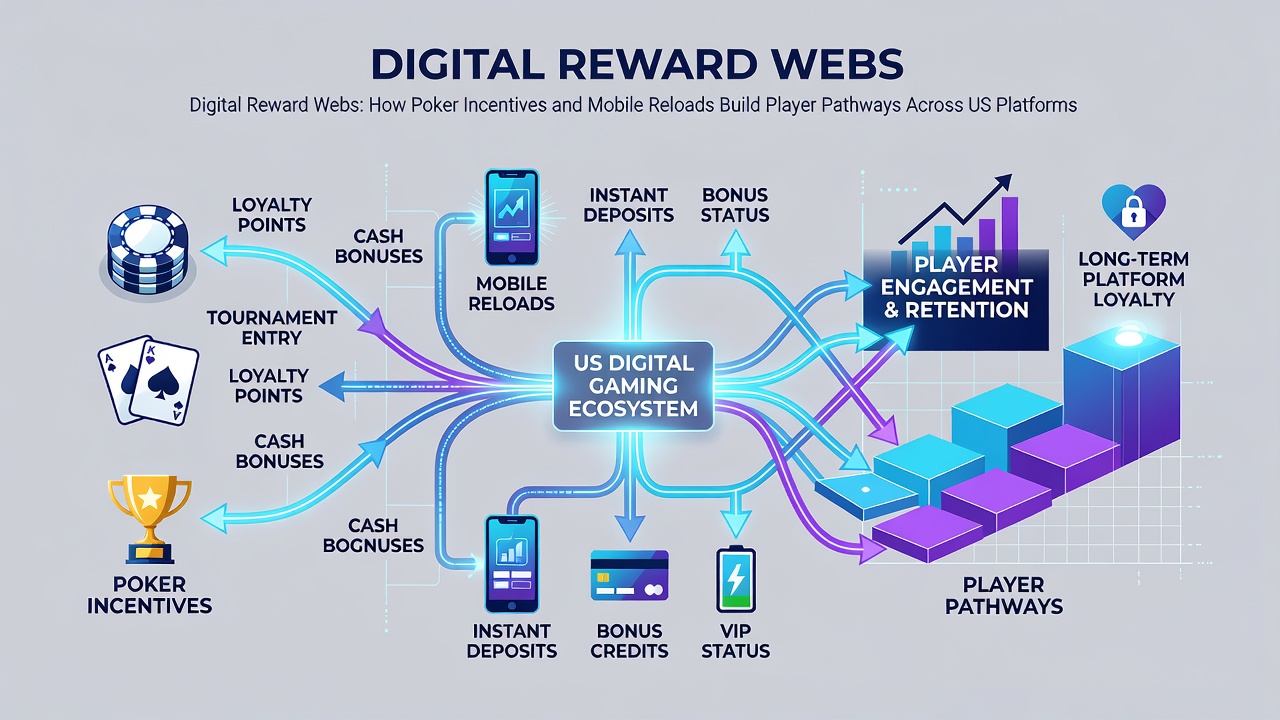
Operators employ unified player accounts that merge activity across desktop poker clients and mobile applications, allowing reward systems to recognize combined volume regardless of access method. According to the American Gaming Association, integrated tracking supports more precise allocation of promotional budgets toward high-value segments. This integration also enables dynamic offers where a player’s recent poker session performance triggers a personalized mobile reload percentage unavailable to the general user base.
Additional linkages appear in multi-state operations where shared wallets permit seamless movement between jurisdictions with differing regulatory frameworks. Data collected through these systems shows that reload eligibility often carries geographic modifiers, adjusting bonus values based on local tax structures while preserving the core sequence of poker participation followed by mobile deposit activation.
Regulatory Context and Industry Reporting
State gaming control boards continue to monitor how combined reward structures affect player behavior, requiring periodic disclosures of bonus redemption rates and associated wagering volumes. Reports submitted to bodies such as the New Jersey Division of Gaming Enforcement highlight that poker-linked mobile reloads constitute a growing share of total promotional spend, particularly among operators holding multi-state licenses. Industry associations compile these figures into comparative analyses that track retention metrics across different incentive models.
Academic researchers examining longitudinal datasets have noted correlations between structured reload sequences and reduced early-stage churn, though outcomes vary by demographic cohort and preferred game type. These findings inform platform adjustments scheduled for later quarters, where operators test variations in reward stacking limits and eligibility windows.
Conclusion
US platforms continue refining digital reward webs that interweave poker incentives with mobile reload opportunities, producing measurable pathways that guide users from initial engagement through sustained multi-product participation. Available data from regulatory submissions and industry analyses illustrate how these systems operate within established compliance frameworks while adapting to evolving player patterns observed through June 2026 and beyond.