Charting the Evolution of Multi-Tiered Incentives Across American Sportsbooks and Casinos
Jordan Weber · Jul 28, 2026
Charting the Evolution of Multi-Tiered Incentives Across American Sportsbooks and Casinos
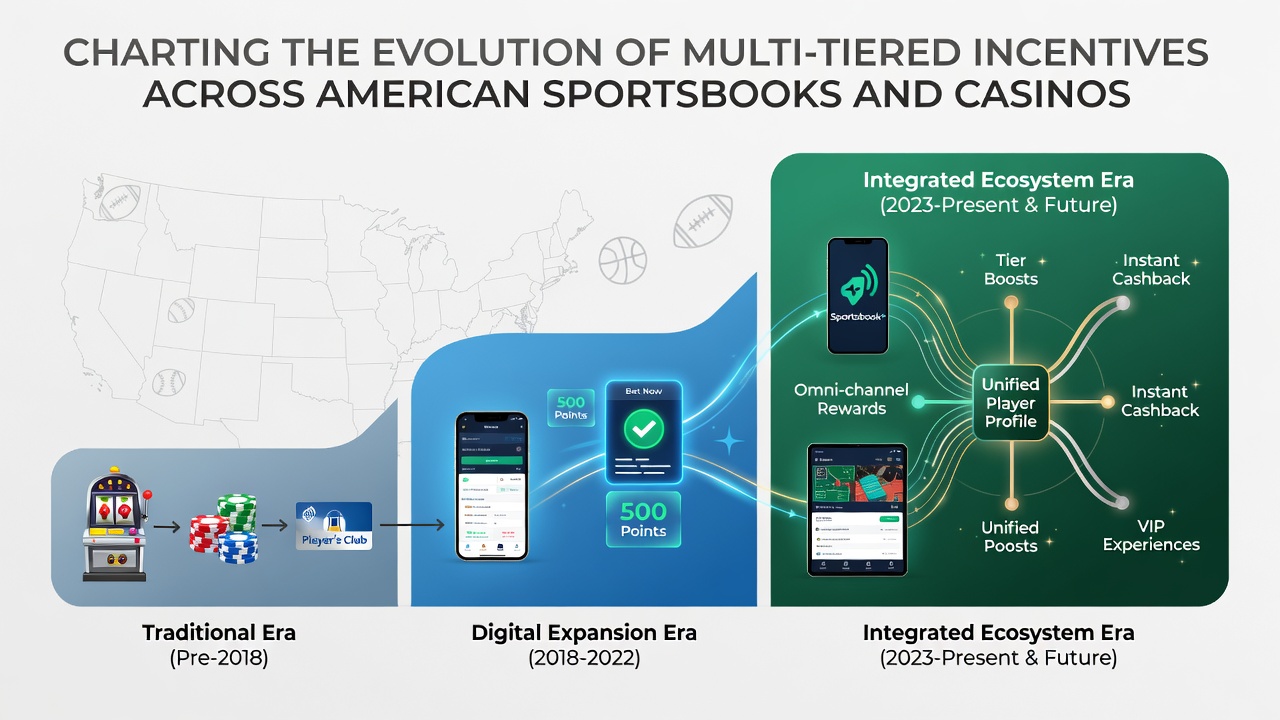
American sportsbooks and casinos have shifted from simple sign-up offers toward complex, multi-tiered incentive systems that reward ongoing participation through structured levels, and this progression accelerated after the 2018 Supreme Court decision that opened legal sports betting across much of the country. Early platforms relied on one-time deposit matches or basic free bets, yet operators soon recognized that sustained engagement required layered programs that combined initial promotions with recurring rewards tied to play volume and loyalty status.
Initial Structures Following Legal Expansion
States such as New Jersey and Pennsylvania launched regulated markets where operators introduced welcome packages that stacked deposit bonuses with free-play credits, and these offerings quickly evolved when data showed players responded to progression mechanics that unlocked higher rewards after meeting wagering thresholds. By 2020 several major platforms had implemented tiered loyalty clubs where users advanced from entry-level benefits like enhanced odds or cashback percentages to premium tiers granting personalized account managers and exclusive event access, according to reports compiled by the American Gaming Association.
Integration of Sportsbook and Casino Rewards
Hybrid incentives emerged as sportsbooks partnered with affiliated casino products to create unified accounts that tracked activity across verticals, allowing a single loyalty meter to accumulate points from both sports wagers and slot or table game play. This approach created seamless progress through multiple tiers without requiring separate programs, and operators observed that such consolidation increased retention rates during periods when one product category experienced seasonal dips. Data from regulatory filings in states including Michigan and Illinois illustrate how combined play metrics became standard by 2023, enabling players to reach higher reward brackets faster through diversified betting patterns.
Refinements Observed Through Mid-2026
By July 2026 platforms had refined these systems further with dynamic tier resets that aligned with fiscal quarters rather than calendar years, while introducing micro-tiers within broader levels to provide more frequent small upgrades such as boosted referral bonuses or accelerated point multipliers. Research from the University of Nevada, Las Vegas Center for Gaming Research indicates that these incremental steps helped maintain momentum for mid-tier players who previously stalled between major thresholds. Operators also began incorporating insurance-style features where accumulated losses at certain tiers triggered automatic cashback or free bet credits, a development that built directly on earlier cashback loops but added predictive algorithms to adjust eligibility in real time.
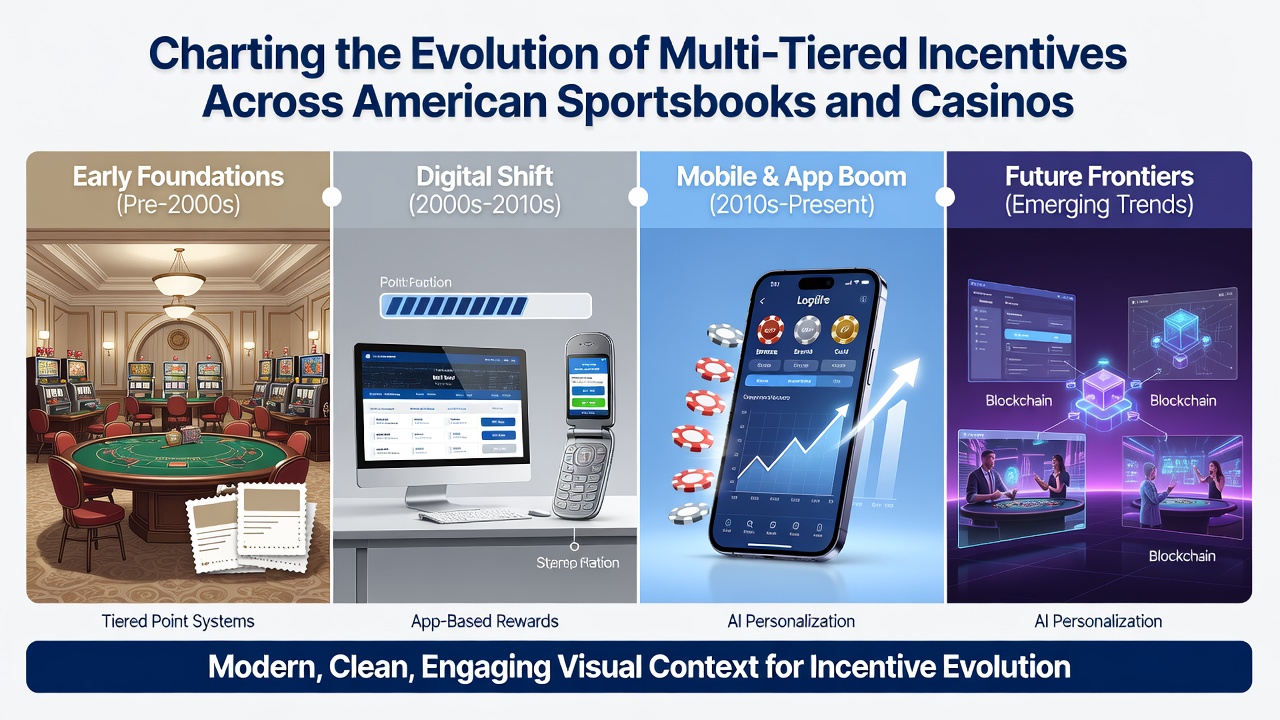
Regional variations appeared as well, with East Coast markets emphasizing sports-centric ladders tied to live event betting while Midwest and Western operators leaned toward casino-heavy progressions that rewarded table game volume with tiered comps for hotel stays and dining. These differences reflect state-specific regulatory frameworks that shape how incentives can be structured and advertised.
Technological and Regulatory Influences
Advancements in mobile app functionality supported more granular tracking of tier progress, with push notifications alerting users to imminent level-ups or expiring benefits that required immediate action. Regulatory bodies in multiple jurisdictions required clearer disclosure of wagering requirements attached to each tier, which prompted operators to simplify language and provide calculators within the apps so players could project rewards based on planned activity. Industry analyses note that these transparency measures coincided with broader adoption of responsible gaming tools that let users set tier-related spending limits without losing accumulated status.
Conclusion
The trajectory of multi-tiered incentives in American sportsbooks and casinos demonstrates a consistent move toward interconnected, data-driven systems that balance acquisition with retention across both sports and gaming verticals. Continued refinement through 2026 suggests these programs will incorporate additional personalization layers while maintaining compliance with evolving state rules, and observers note that the core structure now centers on measurable progression rather than isolated promotional events.